
KB Journal 16.1 (Winter 2023)

KB Journal Editor: David Blakesley
Associate Editor: Rochelle Gregory
- Kenneth Burke’s Theory of Attention: Homo Symbolicus’ Experiential Poetics by David Landes
- A Flash of Light to Blurred Vision: Theorizing Generating Principles for Nuclear Policy from The Day After Trinity to the Year 2021 by Cody Hunter
- Kenneth Burke’s Late Theory of History: The Personalistic and Instrumentalist Principles by Michael Feehan
- Kenneth Burke and the Gargoyles of Language: Perspective by Incongruity and the Transvaluation of Values in Counter-Statement and Permanence and Change by Jeremy Cox
- A Survey of the Diverse Historical Uses of the Circumstantial Terms from Homer to Kenneth Burke and Beyond by Lawrence J. Prelli and Floyd D. Anderson
- A Technological Psychosis: The Problem with “Overfishing” in the Magnuson-Stevens Act by Karen Gulbrandsen
- The Morality Martyr Homology by Lisa Glebatic Perks
- Slaying the Vile Beasts Within: Theorizing a Mortification Mechanism by Floyd D. Anderson and Kevin R. McClure
- Review: Philosophical Turns: Epistemological, Linguistic, and Metaphysical by Robert Wess. Reviewed by Greig Henderson
The cover image is a screenshot from David Lynch's Twin Peaks, "The Return, Part 8" or "The Last Evening."
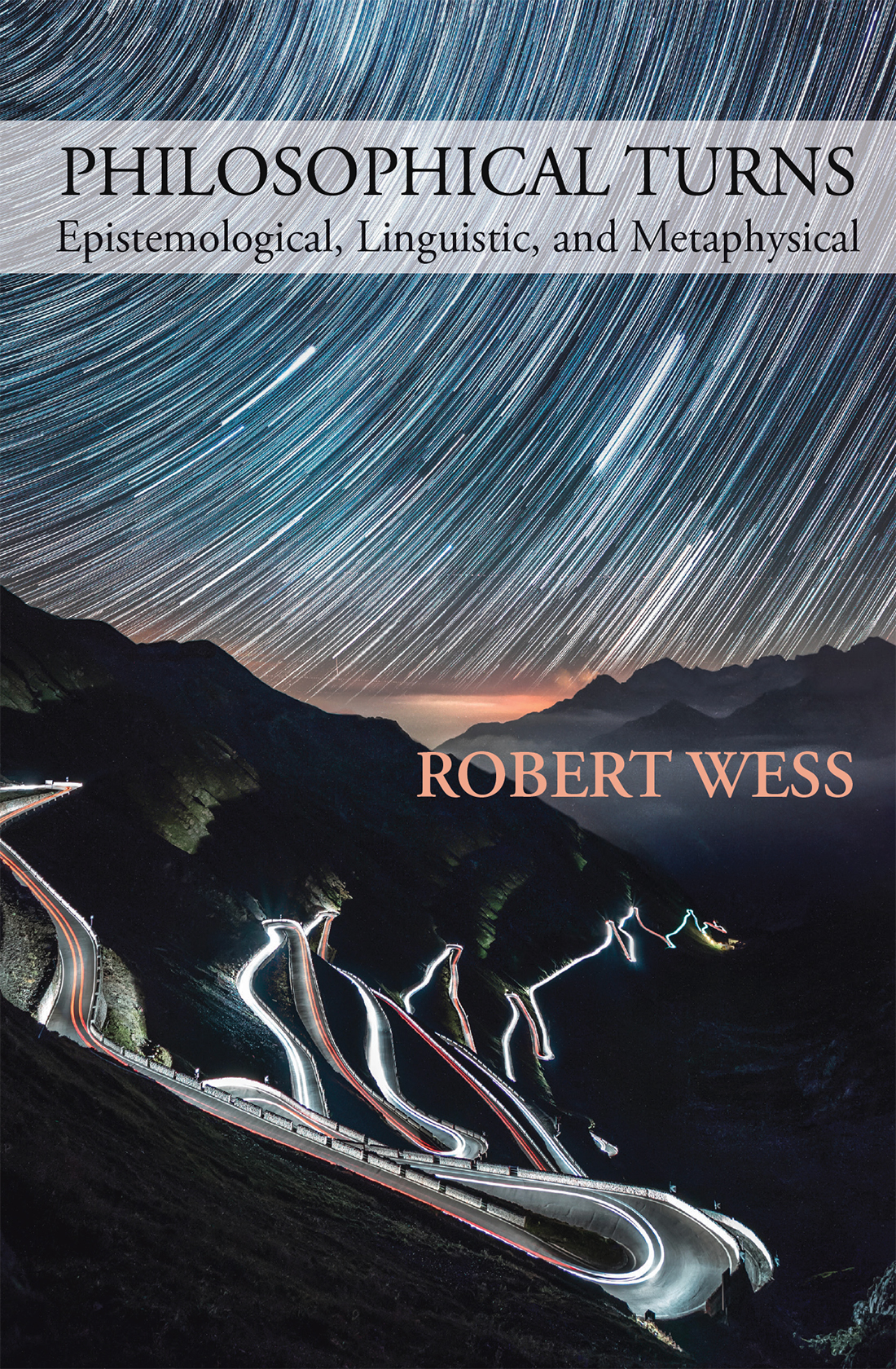 Robert Wess, Philosophical Turns: Epistemological, Linguistic, and Metaphysical , Parlor Press, 2023r. 288 pp. $34.99 (paperback); $69.99 (hardcover) $29.99 (PDF and EPUB)
User login
Welcome to KB Journal
 Register for a free account to take advantage of new content notifications, make connections with the scholarly community, join the Burke Society, get access to premium bibliographies and archives, and more. New! Join the KB Society online and get access to premium content and publisher discounts.
Save the dates! KB in Ghent, "Rhetoric in a Precarious World"
Rhetoric in a Precarious World. Moving forward with and from Kenneth Burke
In partnership with the Rhetoric Society of Europe, the Kenneth Burke Society will return to Ghent University July 1–3, 2026! In this conference, we aim to explore how the study of rhetoric can respond to and engage with the contentious dynamics our our times, moving forward both with and from KB.
Learn more and read the CFP: KB Conference in Ghent 2026. Proposals are due by October 31st, 2025.
Submit to KB Journal
Please note!
KB Journal is in the process of migrating to a new Drupal 11 website and is temporarily closing the Submittable review system until December 2026. Please check back then!

KB: A Conversation (Video)
Find out about Harry Chapin's video interview of Kenneth Burke and how you can get a copy.

Shopping Cart

Who's online
There are currently 0 users online.
Tweet Something about Kenneth Burke
Tweets at the Edge of an Abyss
Editor

David Blakesley is the Campbell Chair in Technical Communication and Professor of Rhetorics, Communication, and Information Design at Clemson University. His books about or drawing from Burke include The Elements of Dramatism, Late Poems 1968–1993 by Kenneth Burke ((with Julie Whitaker), and The Terministic Screen: Rhetorical Perspectives on Film (SIU Press, 2007). He received the Distinguished Service Award from the KB Society in 2005.
Associate Editor

Cody Hunter is the Assistant Director of Core Writing and a Teaching Assistant Professor of English at the University of Nevada, Reno. Her works inspired by and drawing from Burke include Walking Back the System Trope: Reimagining Incarceration and the State Through a Spatial Theory Approach (dissertation), "A Flash of Light to Blurred Vision: Theorizing Generating Principles for Nuclear Policy from The Day After Trinity to the Year 2021," and "Rhetorical Listening in Action (in the Classroom): Centering Tropes for Large Group Decision-Making on (Potentially) Polarizing Rhetorical Problems" (forthcoming).
Associate Editor
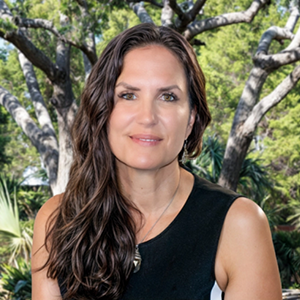
Heather Hartness is an Assistant Professor of Rhetoric and Composition at Northwest Florida State College. Her dissertation, titled A Burkean Herstory: Liminal Narratives in the Life and Work of Kenneth Burke focused on Libbie Burke and other exemplary women surrounding K.B.
KB Journal's mission is to explore what it means to be "Burkean." To this end, KB Journal publishes original scholarship that addresses, applies, extends, repurposes, or challenges the writings of Kenneth Burke, which include but are not limited to the major books and hundreds of articles by Burke, as well as the growing corpus of research material about Burke. It provides an outlet for integrating and critiquing the gamut of Burkean studies in communication, composition, English, gender, literature, philosophy, psychology, sociology, and technical writing. In light of this, Kenneth Burke need not be sole focus of a submission, but Burke should be integral to the structure of the argument.